

あなたは医療脱毛についてこんな疑問はありませんか?
- 医療脱毛が安いクリニックはどこ?
- もっと総額を抑えて医療脱毛できないの?
- 安いクリニックでも本当に脱毛効果はあるの?
クリニックでツルツルになるまで全身脱毛をした際の平均は約23万円です。しかし最安値のクリニックを選ぶと約7万円も安く全身脱毛することができます。
では、安いクリニックでも本当に脱毛効果はあるのでしょうか。
この記事では、部位別の医療脱毛が安いクリニックや安く医療脱毛ができるクリニックを選ぶポイント、安いクリニックでも本当に脱毛効果はあるのか?という内容について紹介します。


1.【部位別】クリニックの脱毛料金を徹底比較|医療脱毛が安いクリニックは?

大手クリニック10社の医療脱毛にかかる費用を部位別に比較しました。
クリニックで脱毛完了を目指すには最低5回は通うことが必要です。
安いクリニックを探す場合、5回の総額を比較しましょう。
まず、医療脱毛が最安値のクリニックを部位別に紹介します。
【部位別】最安値で脱毛できるクリニック一覧
| 部位 | 最安値のクリニック | 回数・料金 |
|---|---|---|
| 全身(顔VIO除く) | エミナルクリニック | 5回119,000円 |
| 全身(顔VIO含む) | 5回185,000円 | |
| VIO | 5回40,800円 | |
| 脇 | 湘南美容クリニック | 6回2,500円 |
| 顔 | 6回50,600円 | |
| 腕 | リゼクリニック | 5回81,600円 |
| 足 | 5回93,600円 |
※価格は消費税10%込で表記しています。
それでは、気になる部位の料金を見てみましょう。
>>全身脱毛(顔・VIO除く)の5回総額と平均より安いクリニック
>>全身脱毛(顔・VIO含む)の5回総額と平均より安いクリニック
>>VIO脱毛の5回総額と平均より安いクリニック
>>脇脱毛の5回総額と平均より安いクリニック
>>顔脱毛の5回総額と平均より安いクリニック
>>腕脱毛の5回総額と平均より安いクリニック
>>足脱毛の5回総額と平均より安いクリニック
1-1.全身脱毛(顔・VIO除く)の5回総額と平均より安いクリニック
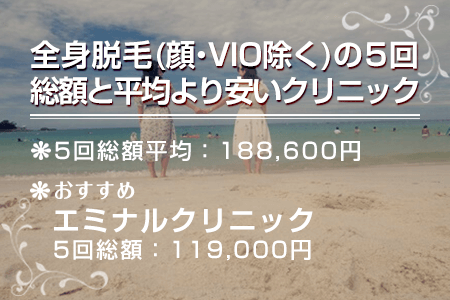
大手クリニック10社の全身脱毛(顔・VIO除く)にかかる金額を比較すると以下のようになりました。
全身脱毛5回(顔・VIO除く)の総額と平均との比較
| クリニック | 全身脱毛5回総額 (顔・VIO除く) |
|---|---|
| エミナルクリニック | 119,000円最安値! |
| アリシアクリニック | 128,800円(6回) |
| GLOWクリニック | 168,000円 |
| フレイアクリニック | 173,800円 |
| 平均 | 188,600円 |
| リゼクリニック | 192,000円 |
| 渋谷美容外科クリニック | 198,000円 |
| レジーナクリニック | 207,900円 |
| ミセルクリニック | 217,800円 |
| アイエスクリニック | 236,500円 |
| 湘南美容クリニック | 244,200円(6回) |
※価格は消費税10%込で表記しています。
※エミナルクリニックは地域Aの料金(エミナルクリニックは地域Aの料金(対象地域:対象地域…北海道、宮城、東京、神奈川、群馬、埼玉、千葉、新潟、富山、石川、長野、岐阜、静岡、愛知、三重、大阪、京都、奈良、兵庫(神戸院、神戸御幸通院)、広島、岡山、徳島、香川、愛媛、高知、福岡(福岡天神院)、長崎))
大手クリニック10社の全身脱毛(顔・VIO除く)料金を平均すると、5回約19万円となりました。
一方、サロンで自己処理が不要になるまで全身脱毛(顔・VIO含む)を行った場合、12回約30万円かかります。
顔やVIOを除く全身を安く脱毛したい人は、クリニックで脱毛するのがおすすめです。
それでは次に、平均より安いクリニックを紹介します。
全身脱毛(顔・VIO除く)が最安値のエミナルクリニック
| 料金 | 全身(顔VIO除く)5回119,000円(税込) 全身(顔VIO含む)5回185,000円(税込) |
|---|---|
| 適用可能 キャンペーン |
学割:10%OFF 紹介割:最大5万円OFF ペア割:最大5万円OFF 乗り換え割:最大5万円OFF |
| 初診料・ 薬代など |
無料 |
| 予約方法 | 1.「無料カウンセリング」をタップ 2.予約前の注意事項を確認し2箇所にチェックを入れる 3.利用人数と希望の院を選択 4.カレンダーから希望の日時を選択 5.お客様情報を入力 6.入力内容を確認して申し込む |
北海道、東北
北海道:札幌院、宮城:仙台院、栃木:宇都宮院
関東
埼玉:大宮院、千葉:千葉院、東京:池袋院、新宿院、渋谷院、銀座院、町田院、上野院、立川院、神奈川:横浜院、桜木町院、川崎院
中部
富山:富山院、石川:金沢院、長野:長野院、静岡:静岡院、愛知:名古屋院
関西
京都:京都院、大阪:梅田院、心斎橋院、兵庫:神戸院、姫路院、和歌山:和歌山院
中国、四国
岡山:岡山院、広島:広島院、香川:高松院
九州
福岡:福岡天神院、小倉院、久留米院、長崎:長崎院、熊本:熊本院、大分:大分院、宮崎:宮崎院、鹿児島:鹿児島院
- 全身+VIO脱毛でも5回119,000円(税込)
- 月々2,120円(税込)で全身脱毛に通える
- 月1回のペースで通えて最短5ヶ月で完了を目指せる
- 約60分で全身を1回でまとめて脱毛できる
エミナルクリニックのキャンペーン情報
アリシアクリニック
| 料金 | 全身(VIO脱毛含む)6回174,240円(税込) 全身(顔VIO含む)6回215,200円(税込) |
|---|---|
| 適用可能 キャンペーン |
ペア割:2名10%OFF、3名以上15%OFF 新規契約でフィットネス2ヶ月通い放題 |
| 初診料・ 薬代など |
無料 |
| 予約方法 | 1.「無料カウンセリングに行く」をタップ 2.希望のエリア、クリニックを選択 3.カレンダーから希望の日時を選択 4.お客様情報を入力 5.入力内容を確認して申し込む |
関東
東京:銀座6丁目院、銀座院、上野院、表参道院、渋谷駅前院、新宿東口院、新宿西口医院、池袋院、立川院、町田院、神奈川:横浜院、川崎駅前院、千葉:船橋院、柏院、千葉院、津田沼院、埼玉:大宮院
中部
愛知:名古屋駅前院、名古屋栄院
関西
大阪:梅田院、心斎橋院
- 1回30分で顔VIOを除く全身脱毛ができる
- 一括払いで10,000円OFF
- 24回までの分割手数料が無料
アリシアクリニックのキャンペーン情報
GLOWクリニック
| 料金 | 全身(顔VIO除く)5回168,000円(税込) 全身(顔VIO含む)5回375,000円(税込) |
|---|---|
| 適用可能 キャンペーン |
学割:最大9万円OFF 乗り換え割:最大9万円OFF ペア割:最大9万円OFF 口コミ割:最大9万円OFF 紹介割:最大14万円OFF |
| 初診料・ 薬代など |
無料 |
| 予約方法 | 1.「まずは無料カウンセリングから」をタップ 2.お客様情報を入力 3.希望の店舗を選択 4.カレンダーから希望日を選択 5.希望の時間を選択 6.入力内容を確認して申し込む |
関東
東京:渋谷院(GLOW clinic 渋谷院)、新宿院(GOODDAY clinic(提携院))、恵比寿院(レディアス美容クリニック恵比寿)
関西
大阪:大阪院(ウェルネスビューティークリニック 大阪院(提携院))
- シェービング代や麻酔代が無料
- 月々1,500円で顔VIO除く全身脱毛に通える
GLOWクリニックのキャンペーン情報へ
フレイアクリニック
| 料金 | 全身(顔VIO除く)5回173,800円(税込) 全身(顔VIO含む)5回316,030円(税込) |
|---|---|
| 適用可能 キャンペーン |
ペア割:1万円OFF 乗り換え割:3.000円OFF セット割:最大15%OFF 学割プランあり |
| 初診料・ 薬代など |
無料 |
| 予約方法 | 1.「無料カウンセリング予約」をタップ 2.予約人数と希望のクリニックを選択 3.利用人数と希望の院を選択 4.カレンダーから希望の日時を選択 5.お客様情報を入力 6.入力内容を確認して申し込む |
北海道
北海道:札幌院
関東
東京:新宿院、銀座院、表参道院、上野院、神奈川:横浜院
中部
愛知:名古屋院
関西
大阪:大阪梅田院
九州、沖縄
福岡:福岡天神院、沖縄:沖縄那覇院
- 痛みが少ない蓄熱式の脱毛器を使用
- 通常の全身脱毛のコースなら麻酔が無料
- 月々2,000円で全身脱毛に通えるクイックコースあり
フレイアクリニックのキャンペーン情報
リゼクリニック
| 料金 | 全身(顔VIO除く)5回192,000円(税込) 全身(顔VIO含む)5回228,000円(税込) |
|---|---|
| 適用可能 キャンペーン |
学割+ペア割:20%OFF 学割:10%OFF ペア割:10%OFF 乗り換え割:10%OFF |
| 初診料・ 薬代など |
無料 |
| 予約方法 | 1.「無料カウンセリング予約」をタップ 2.希望の院を選択 3.「空き状況を確認して予約する」をタップ 4.カレンダーから希望の日時を選択 5.希望のプラン、回数、支払い方法を選択 6.お客様情報を入力 7.入力内容を確認して申し込む |
北海道、東北
北海道:札幌院、青森:青森院、八戸院、岩手:盛岡院、宮城:仙台院、福島:いわき院、郡山院
関東
埼玉:大宮院、千葉:柏院、東京:新宿院、渋谷院、銀座院、立川院、町田院、神奈川:横浜院
中部
新潟:新潟院、愛知:名古屋栄院、名古屋駅前院
関西
京都:京都四条院、大阪:大阪梅田院、心斎橋院、兵庫:神戸三宮院
中国国
広島:広島院
九州
福岡:福岡天神院
- 24回の分割払いなら手数料がかからない
- キャンセル料やシェービング代が無料
- コース終了後は半額以下で気になる部位だけを脱毛できる
リゼクリニックのキャンペーン情報
1-2.全身脱毛(顔・VIO含む)の5回総額と平均より安いクリニック

全身脱毛5回(顔・VIO含む)の総額と平均との比較
| クリニック | 全身脱毛5回総額 (顔・VIO含む) |
|---|---|
| エミナルクリニック | 185,000円最安値! |
| アリシアクリニック | 215,200円(6回) |
| リゼクリニック | 228,000円 |
| 湘南美容クリニック | 297,000円(6回) |
| 平均 | 300,928円 |
| クレアクリニック | 303,450円 |
| フレイアクリニック | 316,030円 |
| アイエスクリニック | 326,700円 |
| 新宿美容外科クリニック | 357,500円 |
| GLOWクリニック | 375,000円 |
| ドクター松井クリニック | 405,400円 |
※価格は消費税10%込で表記しています。
※エミナルクリニックは地域Aの料金(対象地域:対象地域…北海道、宮城、東京、神奈川、群馬、埼玉、千葉、新潟、富山、石川、長野、岐阜、静岡、愛知、三重、大阪、京都、奈良、兵庫(神戸院、神戸御幸通院)、広島、岡山、徳島、香川、愛媛、高知、福岡(福岡天神院)、長崎)
大手クリニック10社の全身脱毛(顔・VIO含む)料金を平均すると、5回約30万円となりました。
サロンで自己処理が不要になるまで通った場合は12回約30万円になります。
クリニックの場合、少ない回数で脱毛完了できるので早く脱毛完了を目指すことができます。
また、脱毛後のアフターケアがしっかりしていて医師が常駐しているため肌トラブルが起きても安心です。
早く安全に脱毛完了したい人はクリニックで脱毛することをおすすめします。
続いて、全身脱毛(顔・VIO含む)が最安値のクリニックを紹介します。
全身脱毛(顔・VIO含む)が最安値のエミナルクリニック
| 料金 | 全身(顔VIO除く)5回119,000円(税込) 全身(顔VIO含む)5回185,000円(税込) |
|---|---|
| 適用可能 キャンペーン |
学割:10%OFF 乗り換え割:最大5万OFF 紹介割:最大5万円OFF ペア割:最大5万円OFF |
| 初診料・ 薬代など |
無料 |
| 予約方法 | 1.「無料カウンセリング」をタップ 2.注意事項を確認し2ヶ所にチェックを入れる 3.利用人数と希望の院を選択 4.カレンダーから希望の日時を選択 5.お客様情報を入力 6.入力内容を確認して申し込む |
北海道、東北
北海道:札幌院、宮城:仙台院、栃木:宇都宮院
関東
埼玉:大宮院、千葉:千葉院、東京:池袋院、新宿院、渋谷院、銀座院、町田院、上野院、立川院、神奈川:横浜院、桜木町院、川崎院
中部
富山:富山院、石川:金沢院、長野:長野院、静岡:静岡院、愛知:名古屋院
関西
京都:京都院、大阪:梅田院、心斎橋院、兵庫:神戸院、姫路院、和歌山:和歌山院
中国、四国
岡山:岡山院、広島:広島院、香川:高松院
九州
福岡:福岡天神院、小倉院、久留米院、長崎:長崎院、熊本:熊本院、大分:大分院、宮崎:宮崎院、鹿児島:鹿児島院
- 最安値で顔やVIOを含む全身脱毛を行える
- 割引を利用すれば全身脱毛の料金がさらに安くなる
- 痛みが少ない脱毛器が導入されている
エミナルクリニックキャンペーン情報
アリシアクリニック
| 料金 | 全身(VIO含む)6回128,800円(税込) 全身(顔VIO含む)6回215,200円(税込) |
|---|---|
| 適用可能 キャンペーン |
ペア割:2名10%OFF、3名以上15%OFF 新規契約でフィットネス2ヶ月無料 |
| 初診料・ 薬代など |
無料 |
| 予約方法 | 1.「無料カウンセリングに行く」をタップ 2.希望のエリア、クリニックを選択 3.カレンダーから希望の日時を選択 4.お客様情報を入力 5.入力内容を確認して申し込む |
関東
東京:銀座6丁目院、銀座院、上野院、表参道院、渋谷駅前院、新宿東口院、新宿西口医院、池袋院、立川院、町田院、神奈川:横浜院、川崎駅前院、千葉:船橋院、柏院、千葉院、津田沼院、埼玉:大宮院
中部
愛知:名古屋駅前院、名古屋栄院
関西
大阪:梅田院、心斎橋院
- 初回に4回分の予約をまとめて取れる
- 当日でもキャンセル料が無料
アリシアクリニックのキャンペーン情報
リゼクリニック
| 料金 | 全身(顔VIO除く)5回192,000円(税込) 全身(顔VIO含む)5回228,000円(税込) |
|---|---|
| 適用可能 キャンペーン |
学割+ペア割:20%OFF 学割:10%OFF ペア割:10%OFF 乗り換え割:10%OFF |
| 初診料・ 薬代など |
無料 |
| 予約方法 | 1.「無料カウンセリング予約」をタップ 2.希望の院を選択 3.「空き状況を確認して予約する」をタップ 4.カレンダーから希望の日時を選択 5.希望のプラン、回数、支払い方法を選択 6.お客様情報を入力 7.入力内容を確認して申し込む |
北海道、東北
北海道:札幌院、青森:青森院、八戸院、岩手:盛岡院、宮城:仙台院、福島:いわき院、郡山院
関東
埼玉:大宮院、千葉:柏院、東京:新宿院、渋谷院、銀座院、立川院、町田院、神奈川:横浜院
中部
新潟:新潟院、愛知:名古屋栄院、名古屋駅前院
関西
京都:京都四条院、大阪:大阪梅田院、心斎橋院、兵庫:神戸三宮院
中国国
広島:広島院
九州
福岡:福岡天神院
- 通常5回288,000円が期間限定で228,000円
- 24回までの分割金利手数料が無料
- シェービング代やキャンセル料が無料
リゼクリニックのキャンペーン情報
湘南美容クリニック
| 料金 | 全身(顔VIO除く)6回244,200円(税込) 全身(顔VIO含む)6回297,000円(税込) |
|---|---|
| 適用可能 キャンペーン |
学割:5%OFF 期間限定で全身(顔VIO除く)6回178,000円(税込) 期間限定で全身(顔VIO含む)6回198,000円(税込) 乗り換え割トライアル Sパーツ1回4,050円(税込) Lパーツ1回9,980円(税込) |
| 初診料・ 薬代など |
無料 |
| 予約方法 | 1.「今すぐ予約する」をタップ 2.予約フォームにプロフィールを入力 3.希望のエリア、クリニック、希望日を選択 4.希望のコース・部位で「パーフェクト全身脱毛」を選択 5.入力内容を確認して申し込む |
北海道、東北
北海道:札幌院、宮城:仙台院、福島:福島院
関東
東京:新宿院、新宿南口院、レーザー新宿大ガード院、渋谷院、渋谷アネックス院、表参道院、六本木院、池袋東口院、池袋西口院、赤坂見附院、高田馬場院、銀座院、新橋銀座口院、品川院、秋葉原院、上野院、湘南メディカル記念病院、西葛西院、東京蒲田院、自由が丘院、二子玉川院、赤羽院、立川院、町田院、八王子院、湘南内科皮フ科クリニック町田院、神奈川:横浜院、横浜東口院、川崎院、武蔵小杉院、橋本院、藤沢院、横須賀中央院、辻堂アカデミア院、埼玉:大宮東口院、川口院、所沢院、川越院、千葉:千葉センシティ院、船橋院、松戸院、柏院、高崎院、宇都宮院、水戸院
中部
愛知:名古屋院、名古屋栄院、金山院、静岡:浜松院、静岡院、新潟:新潟院、石川:金沢院、長野:長野院、岐阜:岐阜院
関西
京都:京都院、京都河原町院、大阪:大阪梅田院、大阪駅前院、大阪心斎橋院、大阪なんば院、大阪あべの院、大阪京橋院、大阪堺東院、兵庫:神戸院、姫路院、西宮北口院、奈良:奈良院
中国、四国
広島:広島院、岡山:岡山院、香川:高松院、愛媛:松山院
九州、沖縄
福岡:福岡院、小倉院、熊本:熊本院、宮崎:宮崎院、鹿児島:鹿児島院、沖縄:那覇院
- 平日限定で全身脱毛(顔VIO含む)3回163,160円(税込)
- 全国に100院以上あり通いやすい
湘南美容クリニックのキャンペーン情報
1-3.VIO脱毛の5回総額と平均より安いクリニック

大手クリニック10社のVIO脱毛の料金の比較表はこちらになります。
VIO脱毛5回の総額と平均との比較
| クリニック | VIO脱毛の5回総額 |
|---|---|
| エミナルクリニック | 40,800円最安値! |
| 湘南美容クリニック | 54,000円(6回) |
| ジュエルクリニック | 65,000円 |
| 平均 | 78,838円 |
| クレアクリニック | 79,500円 |
| リゼクリニック | 81,600円 |
| ミセルクリニック | 87,780円 |
| ドクター松井クリニック | 91,500円 |
| レジーナクリニック | 92,400円 |
| リアラクリニック | 96,800円 |
| フレイアクリニック | 99,000円 |
※価格は消費税10%込で表記しています。
クリニックのVIO脱毛の平均は5回約8万円です。
サロンで自己処理が不要になるまでVIO脱毛をした場合は、12回約12万円かかります。
最近は痛みが少ない蓄熱式の脱毛器を採用しているクリニックも多く、痛みを感じやすいデリケートゾーンでも安心して脱毛することができます。
安く早くVIO脱毛の完了を目指したい人は、クリニックでVIO脱毛を始めましょう。
続いて、平均より安いクリニックを紹介します。
VIO脱毛が最安値のエミナルクリニック
| 料金 | VIO脱毛5回40,800円(税込) |
|---|---|
| 適用可能 キャンペーン |
– |
| 初診料・ 薬代など |
無料 |
| 予約方法 | 1.「無料カウンセリング」をタップ 2.注意事項を確認し2ヶ所にチェックを入れる 3.利用人数と希望の院を選択 4.カレンダーから希望の日時を選択 5.お客様情報を入力 6.入力内容を確認して申し込む |
北海道、東北
北海道:札幌院、宮城:仙台院、栃木:宇都宮院
関東
埼玉:大宮院、千葉:千葉院、東京:池袋院、新宿院、渋谷院、銀座院、町田院、上野院、立川院、神奈川:横浜院、桜木町院、川崎院
中部
富山:富山院、石川:金沢院、長野:長野院、静岡:静岡院、愛知:名古屋院
関西
京都:京都院、大阪:梅田院、心斎橋院、兵庫:神戸院、姫路院、和歌山:和歌山院
中国、四国
岡山:岡山院、広島:広島院、香川:高松院
九州
福岡:福岡天神院、小倉院、久留米院、長崎:長崎院、熊本:熊本院、大分:大分院、宮崎:宮崎院、鹿児島:鹿児島院
- 分割払いなら月々1,000円でVIO脱毛に通える
- 痛みが少ないオリジナル脱毛器を使用している
- 月1回のペースで通えて短期間でVIO脱毛が完了する
エミナルクリニックキャンペーン情報
湘南美容クリニック
| 料金 | VIO脱毛1回9,800円(税込) VIO脱毛3回28,500円(税込) VIO脱毛6回54,000円(税込) |
|---|---|
| 適用可能 キャンペーン |
学割:5%OFF 乗り換え割トライアル Sパーツ1回4,050円(税込) Lパーツ1回9,980円(税込) |
| 初診料・ 薬代など |
無料 |
| 予約方法 | 1.「今すぐ予約する」をタップ 2.予約フォームにプロフィールを入力 3.希望のエリア、クリニック、希望日を選択 4.希望のコース・部位で「ハイジニーナVIO」を選択 5.入力内容を確認して申し込む |
北海道、東北
北海道:札幌院、宮城:仙台院、福島:福島院
関東
東京:新宿院、新宿南口院、レーザー新宿大ガード院、渋谷院、渋谷アネックス院、表参道院、六本木院、池袋東口院、池袋西口院、赤坂見附院、高田馬場院、銀座院、新橋銀座口院、品川院、秋葉原院、上野院、湘南メディカル記念病院、西葛西院、東京蒲田院、自由が丘院、二子玉川院、赤羽院、立川院、町田院、八王子院、湘南内科皮フ科クリニック町田院、神奈川:横浜院、横浜東口院、川崎院、武蔵小杉院、橋本院、藤沢院、横須賀中央院、辻堂アカデミア院、埼玉:大宮東口院、川口院、所沢院、川越院、千葉:千葉センシティ院、船橋院、松戸院、柏院、高崎院、宇都宮院、水戸院
中部
愛知:名古屋院、名古屋栄院、金山院、静岡:浜松院、静岡院、新潟:新潟院、石川:金沢院、長野:長野院、岐阜:岐阜院
関西
京都:京都院、京都河原町院、大阪:大阪梅田院、大阪駅前院、大阪心斎橋院、大阪なんば院、大阪あべの院、大阪京橋院、大阪堺東院、兵庫:神戸院、姫路院、西宮北口院、奈良:奈良院
中国、四国
広島:広島院、岡山:岡山院、香川:高松院、愛媛:松山院
九州、沖縄
福岡:福岡院、小倉院、熊本:熊本院、宮崎:宮崎院、鹿児島:鹿児島院、沖縄:那覇院
- 平日なら3回25,650円、6回48,600円でVIO脱毛に通える
- シェービングが10分間無料だから剃り残しがあっても安心
- 2種類の麻酔を利用して痛みを軽減できる
湘南美容クリニックのキャンペーン情報
ジュエルクリニック
| 料金 | VIO脱毛1回20,000円(税込) VIO脱毛3回45,000円(税込) VIO脱毛5回65,000円(税込) |
|---|---|
| 適用可能 キャンペーン |
学割:10%OFF 乗り換え割:1万円OFF ペア割:5,000円OFF 紹介割:好きなパーツプレゼント |
| 初診料・ 薬代など |
無料 |
| 予約方法 | 1.「無料カウンセリング予約はこちら」をタップ 2.当院のご利用で「はじめて」を選択 3.希望の日時を選択 4.お客様情報を入力 5.希望の診療で「医療レーザー脱毛」を選択 6.当日の治療の希望を選択 7.脱毛したい部位で「V.I.O」を選択 8.送信内容確認にチェックを入れる 9.送信をタップして申し込む |
関東
東京:恵比寿
- VIOの太い毛に効果が高い脱毛器が導入されている
- JR恵比寿駅から徒歩1分で通いやすい
ジュエルクリニックのキャンペーン情報へ
1-4.脇脱毛の5回総額と平均より安いクリニック
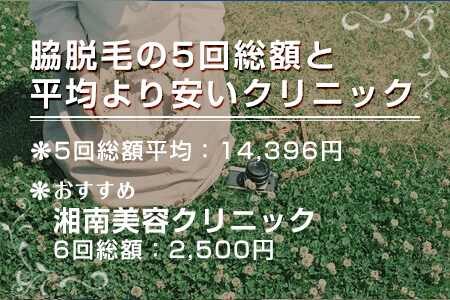
大手クリニック10社の脇脱毛にかかる料金の比較は下の表をご覧ください。
脇脱毛5回の総額と平均との比較
| クリニック | 脇脱毛の5回総額 |
|---|---|
| 湘南美容クリニック | 2,500円(6回)最安値! |
| 渋谷美容外科クリニック | 8,800円 |
| KMクリニック | 11,000円 |
| リアラクリニック | 11,000円 |
| レジーナクリニック | 13,200円 |
| 平均 | 14,396円 |
| ミセルクリニック | 16,280円 |
| クレアクリニック | 17,380円 |
| カルミア美肌クリニック | 17,600円 |
| リゼクリニック | 19,800円 |
| フレイアクリニック | 22,000円 |
※価格は消費税10%込で表記しています。
クリニックの脇脱毛の平均は5回約14,000円となりました。
一方、サロンの平均は12回約25,000円で、自己処理が不要な状態を目指せます。
クリニックは1年ほどで完了まで目指せますが、サロンで脇脱毛を行った場合は完了までに2~5年もかかってしまいます。
安く早く脇脱毛を完了したい人は、クリニックで脇脱毛を始めましょう。
では、平均より安いクリニックを紹介します。
脇脱毛が最安値の湘南美容クリニック
| 料金 | 両脇1回500円(税込) 両脇6回2,500円(税込) |
|---|---|
| 適用可能 キャンペーン |
学割:5%OFF 平日割:6回コース10%OFF 乗り換え割トライアル Sパーツ1回4,050円(税込) Lパーツ1回9,980円(税込) |
| 初診料・ 薬代など |
無料 |
| 予約方法 | 1.「今すぐ予約する」をタップ 2.予約フォームにプロフィールを入力 3.希望のエリア、クリニック、希望日を選択 4.希望のコース・部位で「Sパーツ(うなじ)」を選択 5.補足に「Sパーツ(うなじ)を選択したけれど、脇脱毛希望です。」と記入 6.入力内容を確認して申し込む |
北海道、東北
北海道:札幌院、宮城:仙台院、福島:福島院
関東
東京:新宿院、新宿南口院、レーザー新宿大ガード院、渋谷院、渋谷アネックス院、表参道院、六本木院、池袋東口院、池袋西口院、赤坂見附院、高田馬場院、銀座院、新橋銀座口院、品川院、秋葉原院、上野院、湘南メディカル記念病院、西葛西院、東京蒲田院、自由が丘院、二子玉川院、赤羽院、立川院、町田院、八王子院、湘南内科皮フ科クリニック町田院、神奈川:横浜院、横浜東口院、川崎院、武蔵小杉院、橋本院、藤沢院、横須賀中央院、辻堂アカデミア院、埼玉:大宮東口院、川口院、所沢院、川越院、千葉:千葉センシティ院、船橋院、松戸院、柏院、高崎院、宇都宮院、水戸院
中部
愛知:名古屋院、名古屋栄院、金山院、静岡:浜松院、静岡院、新潟:新潟院、石川:金沢院、長野:長野院、岐阜:岐阜院
関西
京都:京都院、京都河原町院、大阪:大阪梅田院、大阪駅前院、大阪心斎橋院、大阪なんば院、大阪あべの院、大阪京橋院、大阪堺東院、兵庫:神戸院、姫路院、西宮北口院、奈良:奈良院
中国、四国
広島:広島院、岡山:岡山院、香川:高松院、愛媛:松山院
九州、沖縄
福岡:福岡院、小倉院、熊本:熊本院、宮崎:宮崎院、鹿児島:鹿児島院、沖縄:那覇院
- 脇脱毛の料金が圧倒的に安い
- 1回500円で脇の医療脱毛を体験できる
- 大手クリニックだから脱毛実績が豊富
湘南美容クリニックのキャンペーン情報
渋谷美容外科クリニック
| 料金 | 【夜休日】両脇5回8,800円(税込) 【平日昼】両脇5回8,360円(税込) |
|---|---|
| 適用可能 キャンペーン |
紹介割:5,000OFF |
| 初診料・ 薬代など |
初診料:無料 薬代(初回のみ):1本1,100円(税込) 2回目以降:毎回処置料2,200円(税込) |
| 予約方法 | 1.「カウンセリング無料脱毛予約」をタップ 2.希望の店舗を選択 3.希望の日時を選択 4.お客様情報を入力 5.脱毛ご希望の部位で「ワキ」を選択 6.年齢を入力 7.入力内容を確認して申し込む |
関東
東京:新橋院、渋谷院、新宿院、池袋院、神奈川:横浜院
- 平日昼間に通えば脇脱毛の料金が安くなる
- 太い毛に効果が高い脱毛器が導入されている
渋谷美容外科クリニックのキャンペーン情報
KMクリニック
| 料金 | 両脇1回3,300円(税込) 両脇6回11,000円(税込) |
|---|---|
| 適用可能 キャンペーン |
LINEの友達追加で1,000円OFFクーポンプレゼント |
| 初診料・ 薬代など |
初診料:無料 再診料:1,100円(税込) 薬代:500円~1,000円程度 ※再診料・薬代は肌トラブルがあった場合のみ必要 |
| 予約方法 | 1.「無料カウンセリングはコチラから」をタップ 2.ご相談項目の医療脱毛にチェック 3.ご相談の詳細に「両脇脱毛」と記入 4.希望の日時を選択 5.お客様情報を入力 6.プライバシーポリシーに同意するにチェック 7.入力内容を確認して申し込む |
関東
東京:新宿、銀座
- 蓄熱式のレーザーを使用するため痛みが少ない
- 脇と腕をまとめてできるセットプランがある
KMクリニックのキャンペーン情報へ
リアラクリニック
| 料金 | 両脇1回4,070円(税込) 両脇6回11,000円(税込) |
|---|---|
| 適用可能 キャンペーン |
学割:10%OFF 乗り換え割:10%OFF |
| 初診料・ 薬代など |
無料 |
| 予約方法 | 1.「無料カウンセリング予約」をタップ 2.希望のクリニックを選択 3.希望の日時を選択 4.お客様情報を入力 5.希望のコースで「無料カウンセリング」を選択 6.プライバシーポリシーに同意するにチェック 7.入力内容を確認して申し込む |
関東
東京:池袋院、新宿西口院、新宿院
中部
愛知:名古屋院、名古屋栄院
- 痛みが少ないメディオスターを使用
- 当日のキャンセル料やシェービング代が無料
リアラクリニックのキャンペーン情報へ
レジーナクリニック
| 料金 | 両脇1回4,400円(税込) 両脇5回13,200円(税込) 両脇8回19,800円(税込) |
|---|---|
| 適用可能 キャンペーン |
なし |
| 初診料・ 薬代など |
無料 |
| 予約方法 | 1.「無料カウンセリング予約」をタップ 2.希望のクリニックを選択 3.カレンダーから希望日を選択 4.希望の時間を選択 5.お客様情報を入力 6.入力内容を確認して申し込む |
北海道、東北
北海道:札幌院、宮城:仙台院
関東
埼玉:大宮院、東京:上野院、池袋院、新宿院、表参道院、渋谷院、銀座五丁目院、町田院、千葉:千葉院、神奈川:横浜院
中部
静岡:静岡院、愛知:名古屋院
関西
京都:京都四条河原町院、大阪:大阪梅田院、心斎橋院、兵庫:神戸三宮院
中国
広島:広島院
九州
福岡:福岡博多天神院、熊本:熊本院
- 麻酔が無料で痛みの心配が少ない
- 蓄熱式と熱破壊式の2種類の脱毛器を使用
レジーナクリニックのキャンペーン情報
1-5.顔脱毛の5回総額と平均より安いクリニック

大手クリニック10社の顔脱毛にかかる金額を比較すると以下のようになりました。
顔脱毛5回の総額と平均との比較
| クリニック | 顔脱毛の5回総額 |
|---|---|
| 湘南美容クリニック | 50,600円(6回)最安値! |
| 渋谷美容外科クリニック | 55,000円 |
| ジュエルクリニック | 55,000円 |
| ミセルクリニック | 65,780円 |
| KMクリニック | 70,400円 |
| アイエスクリニック | 72,600円 |
| 平均 | 72,785円 |
| リゼクリニック | 81,600円 |
| 聖心美容クリニック | 88,000円 |
| 新宿美容外科クリニック | 89,870円 |
| フレイアクリニック | 99,000円 |
※価格は消費税10%込で表記しています。
大手クリニック10社のクリニックの顔脱毛の平均は5回約7万円となりました。
一方、サロンで自己処理が不要になるまで顔脱毛を行った場合、12回約11万円かかります。
顔の産毛は脱毛の光が反応しにくいため、サロンでもクリニックでも他の部位に比べて脱毛回数が多くなる傾向があります。
5~8回の総額が安いクリックを選んで、お得に顔脱毛を始めましょう。
それでは次に、平均より安いクリニックを紹介します。
顔脱毛が最安値の湘南美容クリニック
| 料金 | 顔脱毛1回11,550円(税込) 顔脱毛3回31,350円(税込) 顔脱毛6回50,600円(税込) |
|---|---|
| 適用可能 キャンペーン |
学割:5%OFF 乗り換え割トライアル Sパーツ1回4,050円(税込) Lパーツ1回9,980円(税込) |
| 初診料・ 薬代など |
無料 |
| 予約方法 | 1.「今すぐ予約する」をタップ 2.予約フォームにプロフィールを入力 3.希望のエリア、クリニック、希望日を選択 4.希望のコース・部位で「フェイス」を選択 5.入力内容を確認して申し込む |
北海道、東北
北海道:札幌院、宮城:仙台院、福島:福島院
関東
東京:新宿院、新宿南口院、レーザー新宿大ガード院、渋谷院、渋谷アネックス院、表参道院、六本木院、池袋東口院、池袋西口院、赤坂見附院、高田馬場院、銀座院、新橋銀座口院、品川院、秋葉原院、上野院、湘南メディカル記念病院、西葛西院、東京蒲田院、自由が丘院、二子玉川院、赤羽院、立川院、町田院、八王子院、湘南内科皮フ科クリニック町田院、神奈川:横浜院、横浜東口院、川崎院、武蔵小杉院、橋本院、藤沢院、横須賀中央院、辻堂アカデミア院、埼玉:大宮東口院、川口院、所沢院、川越院、千葉:千葉センシティ院、船橋院、松戸院、柏院、高崎院、宇都宮院、水戸院
中部
愛知:名古屋院、名古屋栄院、金山院、静岡:浜松院、静岡院、新潟:新潟院、石川:金沢院、長野:長野院、岐阜:岐阜院
関西
京都:京都院、京都河原町院、大阪:大阪梅田院、大阪駅前院、大阪心斎橋院、大阪なんば院、大阪あべの院、大阪京橋院、大阪堺東院、兵庫:神戸院、姫路院、西宮北口院、奈良:奈良院
中国、四国
広島:広島院、岡山:岡山院、香川:高松院、愛媛:松山院
九州、沖縄
福岡:福岡院、小倉院、熊本:熊本院、宮崎:宮崎院、鹿児島:鹿児島院、沖縄:那覇院
- 美肌効果があるSBCオリジナル脱毛器が導入されている
- 眉間や眉上を含む顔全体をしっかり脱毛できる
- 都合に合わせて毎回好きな院で顔脱毛の施術を受けられる
湘南美容クリニックのキャンペーン情報
渋谷美容外科クリニック
| 料金 | 【夜休日】顔全体5回55,000円(税込) 【平日昼】顔全体5回52,250円(税込) |
|---|---|
| 適用可能 キャンペーン |
紹介割:5,000OFF |
| 初診料・ 薬代など |
初診料:無料 薬代(初回のみ):1本1,100円(税込) 2回目以降:毎回処置料2,200円(税込) |
| 予約方法 | 1.「カウンセリング無料脱毛予約」をタップ 2.希望の店舗を選択 3.希望の日時を選択 4.お客様情報を入力 5.脱毛ご希望の部位で「顔」を選択 6.年齢を入力 7.入力内容を確認して申し込む |
関東
東京:新橋院、渋谷院、新宿院、池袋院、神奈川:横浜院
- 顔脱毛に安く通える平日昼プランがある
- 診療時間が平日23時までで通いやすい
渋谷美容外科クリニックのキャンペーン情報
ジュエルクリニック
| 料金 | 顔脱毛3回42,000円(税込) 顔脱毛5回55,000円(税込) |
|---|---|
| 適用可能 キャンペーン |
学割:10%OFF 紹介割:好きなパーツ無料 |
| 初診料・ 薬代など |
無料 |
| 予約方法 | 1.「無料カウンセリング予約はこちら」をタップ 2.当院のご利用で「はじめて」を選択 3.希望の日時を選択 4.お客様情報を入力 5.希望の診療で「医療レーザー脱毛」を選択 6.当日の治療の希望を選択 7.脱毛したい部位で「顔」を選択 8.送信内容確認にチェックを入れる 9.送信をタップして申し込む |
関東
東京:恵比寿
- 当日予約も可能で予約が取りやすい
- 3種類の脱毛器を使い分けて効率よく顔脱毛を行える
ジュエルクリニックのキャンペーン情報へ
ミセルクリニック
| 料金 | 顔脱毛1回16,280円(税込) 顔脱毛5回65,780円(税込) |
|---|---|
| 適用可能 キャンペーン |
紹介割:1万円OFF ペア割:10%OFF |
| 初診料・ 薬代など |
無料 |
| 予約方法 | 1.「無料カウンセリング予約へ」をタップ 2.希望の院を選択 3.希望施術で医療脱毛を選択 4.希望の日時を選択 5.お客様情報を入力 6.入力内容を確認して申し込む |
関西
大阪:大阪梅田院、兵庫:西宮院、加古川院、姫路院
九州
福岡:直方院
- 大阪や兵庫で人気のクリニック
- 梅田院と加古川院に産毛に効果が高い脱毛器あり
ミセルクリニックのキャンペーン情報へ
KMクリニック
| 料金 | 顔脱毛1回20,900円(税込) 顔脱毛5回70,400円(税込) |
|---|---|
| 適用可能 キャンペーン |
LINEの友達追加で1,000円OFFクーポンプレゼント |
| 初診料・ 薬代など |
初診料:無料 再診料:1,100円(税込) 薬代:500円~1,000円程度 ※再診料・薬代は肌トラブルがあった場合のみ必要 |
| 予約方法 | 1.「無料カウンセリングはコチラから」をタップ 2.ご相談項目の医療脱毛にチェック 3.ご相談の詳細に「顔脱毛」と記入 4.希望の日時を選択 5.お客様情報を入力 6.プライバシーポリシーに同意するにチェック 7.入力内容を確認して申し込む |
関東
東京:新宿、銀座
- 顔脱毛の範囲は頬、鼻の下、口周りの3部位
- 蓄熱式のレーザーを使用するため痛みが少ない
KMクリニックのキャンペーン情報へ
アイエスクリニック
| 料金 | 【オールマシンプラン】顔脱毛5回72,600円(税込) 【メディオスタープラン】顔脱毛5回60,500円(税込) |
|---|---|
| 適用可能 キャンペーン |
なし |
| 初診料・ 薬代など |
初診料:3,300円(税込) 再診料:1,100円(税込) 薬代:550円(税込) |
| 予約方法 | 1.「無料カウンセリング予約はこちら」をタップ 2.希望の診療内容で「医療レーザー脱毛・顔」を選択 3.希望の院を選択 4.希望の日時を選択 5.お客様情報を入力 6.「プライバシーポリシーに同意する」にチェック 7.入力内容を確認して申し込む |
関東
東京:新宿院、銀座院
関西
大阪:梅田院
- もみあげや額を含む顔全体を脱毛できる
- メディオスタープランを選べば顔脱毛の料金が安くなる
アイエスクリニックのキャンペーン情報
1-6.腕脱毛の5回総額と平均より安いクリニック

大手クリニック10社の腕脱毛にかかる金額を比較すると、以下のようになりました。
腕脱毛5回の総額と平均との比較
| クリニック | 腕全体5回 |
|---|---|
| リゼクリニック | 81,600円最安値! |
| ミセルクリニック | 87,780円 |
| カルミア美肌クリニック | 110,000円 |
| クレアクリニック | 126,170円 |
| 聖心美容クリニック | 145,200円 |
| 平均 | 146,255円 |
| 新宿美容外科クリニック | 161,040円 |
| 湘南美容クリニック | 165,000円(6回) |
| アイエスクリニック | 177,276円(6回) |
| ジュエルクリニック | 185,000円 |
| ドクター松井クリニック | 223,493円 |
※価格は消費税10%込で表記しています。
※腕全体の範囲は、ひじ上・ひじ下・手の甲指。
大手クリニック10社の腕脱毛の平均は5回約14万円となりました。
一方、サロンで自己処理が不要になるまで腕脱毛を行った場合、12回約16万円かかります。
安く早く腕脱毛の完了を目指したい人は、最安値で腕脱毛に通えるリゼクリニックをチェックしておきましょう。
では、平均より安いクリニックを紹介します。
腕脱毛が最安値のリゼクリニック
| 料金 | 腕全体5回81,600円(税込) コース終了後1回16,800円(税込) |
|---|---|
| 適用可能 キャンペーン |
学割+ペア割:20%OFF 学割:10%OFF 乗り換え割:10%OFF ペア割:10%OFF |
| 初診料・ 薬代など |
無料 |
| 予約方法 | 1.「無料カウンセリング」をタップ 2.希望の院を選択 3.「空き時間の確認・予約」をタップ 4.カレンダーから希望の日時を選択 5.プラン選択で「腕全体脱毛セット・5回」を選択 6.お客様情報を入力 7.入力内容を確認して申し込む |
北海道、東北
北海道:札幌院、青森:青森院、八戸院、岩手:盛岡院、宮城:仙台院、福島:いわき院、郡山院
関東
埼玉:大宮院、千葉:柏院、東京:新宿院、渋谷院、銀座院、立川院、町田院、神奈川:横浜院
中部
新潟:新潟院、愛知:名古屋栄院、名古屋駅前院
関西
京都:京都四条院、大阪:大阪梅田院、心斎橋院、兵庫:神戸三宮院
中国国
広島:広島院
九州
福岡:福岡天神院
- 月々3,600円(税込)で腕脱毛に通える
- 5回目以降は通常の半額以下で腕脱毛を続けられる
- 増毛化・硬毛化保証があり安心
リゼクリニックのキャンペーン情報
ミセルクリニック
| 料金 | 腕全体5回87,780円(税込) |
|---|---|
| 適用可能 キャンペーン |
ペア割:10%OFF 紹介割:1万円OFF |
| 初診料・ 薬代など |
無料 |
| 予約方法 | 1.「無料カウンセリング予約へ」をタップ 2.希望の院を選択 3.希望施術で医療脱毛を選択 4.希望の日時を選択 5.お客様情報を入力 6.入力内容を確認して申し込む |
関西
大阪:大阪梅田院、兵庫:西宮院、加古川院、姫路院
九州
福岡:直方院
- コース終了後は20%OFFの料金で腕脱毛に通える
- 梅田院と加古川院には痛みが少ないメディオスターあり
ミセルクリニックのキャンペーン情報へ
カルミア美肌クリニック
| 料金 | 腕全体5回110,000円(税込) |
|---|---|
| 適用可能 キャンペーン |
なし |
| 初診料・ 薬代など |
無料 |
| 予約方法 | 1.「お試しはコチラから」をタップ 2.カレンダーから希望の日時を選択し次へ 3.お客様情報を入力し内容確認へ進む 4.入力内容を確認して申し込む |
中国
広島に1院のみ
- 広島で人気の脱毛クリニック
- 痛みが少ない蓄熱式の脱毛器が導入されている
カルミア美肌クリニックのキャンペーン情報
クレアクリニック
| 料金 | ひじ下5回52,580円(税込) 二の腕5回52,580円(税込) 手の甲指5回21,010円(税込) |
|---|---|
| 適用可能 キャンペーン |
ペア割:1,500円の金券 乗り換え割:7,000円キャッシュバック |
| 初診料・ 薬代など |
無料 |
| 予約方法 | 1.「無料カウンセリング」をタップ 2.希望の部位で「部分別脱毛・その他」を選択 3.希望の日時を選択 4.お客様情報を入力 5.入力内容を確認して申し込む |
関東
東京:新宿本院、渋谷院
- 脱毛後にKAMAオイルでケアしてもらえる
- 施術ルームもメイクルームも完全個室
クレアクリニックのキャンペーン情報へ
聖心美容クリニック
| 料金 | ひじ上+ひじ下5回114,400円(税込) 手の甲指5回30,800円(税込) |
|---|---|
| 適用可能 キャンペーン |
なし |
| 初診料・ 薬代など |
小学生:50%OFF 中学生:30%OFF |
| 予約方法 | 1.「来院予約」をタップ 2.「新規Web予約」をタップ 3.メールアドレスを送信 4.届いたメールのリンクをタップ 5.氏名・ふりがなを入力 6.パスワード・ニックネームを入力 7.希望の店舗を選択 8.ご相談項目で「医療脱毛」を選択 9.希望の日時を選択 10.当日の施術や案内メールについて選択 11.入力内容を確認して申し込む |
北海道
北海道:札幌院
関東
東京:東京院、埼玉:大宮院、神奈川:横浜院
中部
静岡:熱海院、愛知:名古屋院
関西
大阪:大阪院
中国
広島:広島院
九州
福岡:福岡院
海外
中国:上海院
- 5,000円でひじ下脱毛を体験できる
- 痛みが少ない蓄熱式の脱毛器が導入されている
聖心美容クリニックのキャンペーン情報へ
1-7.足脱毛の5回総額と平均より安いクリニック

大手クリニック10社の足脱毛にかかる金額を比較すると、以下のようになりました。
足脱毛5回の総額と平均との比較
| クリニック | 足全体5回 |
|---|---|
| リゼクリニック | 93,600円最安値! |
| ミセルクリニック | 98,780円 |
| レジーナクリニック | 99,000円 |
| リアラクリニック | 101,090円 |
| 渋谷美容外科クリニック | 135,300円 |
| 平均 | 152,526円 |
| カルミア美肌クリニック | 162,800円 |
| 湘南美容クリニック | 165,000円(6回) |
| 聖心美容クリニック | 184,800円 |
| ジュエルクリニック | 210,000円 |
| アイエスクリニック | 274,890円(6回) |
※価格は消費税10%込で表記しています。
※足全体の範囲は、ひざ上・ひざ・ひざ下・足の甲指。
大手クリニック10社の足脱毛の平均は5回約15万円となりました。
一方、サロンで自己処理が不要になるまで足脱毛を行った場合、12回約20万円かかります。
足脱毛の平均価格は医療脱毛の方が割安ですが、クリニックによってバラつきがあります。
ミラクリニックの足脱毛は平均よりも5万円以上安いので、必ずチェックしておきましょう。
次に、平均より安いクリニックを紹介します。
足脱毛が最安値のリゼクリニック
| 料金 | 足全体5回93,600円 コース後1回18,800円 |
|---|---|
| 適用可能 キャンペーン |
学割+ペア割:20%OFF 学割:10%OFF ペア割:10%OFF 乗り換え割:10%OFF |
| 初診料・ 薬代など |
無料 |
| 予約方法 | 1.「無料カウンセリング予約」をタップ 2.希望の院を選択 3.「空き状況を確認して予約する」をタップ 4.カレンダーから希望の日時を選択 5.希望のプラン、回数、支払い方法を選択 6.お客様情報を入力 7.入力内容を確認して申し込む |
北海道、東北
北海道:札幌院、青森:青森院、八戸院、岩手:盛岡院、宮城:仙台院、福島:いわき院、郡山院
関東
埼玉:大宮院、千葉:柏院、東京:新宿院、渋谷院、銀座院、立川院、町田院、神奈川:横浜院
中部
新潟:新潟院、愛知:名古屋栄院、名古屋駅前院
関西
京都:京都四条院、大阪:大阪梅田院、心斎橋院、兵庫:神戸三宮院
中国国
広島:広島院
九州
福岡:福岡天神院
- 月々3,300円(税込)で足全体の脱毛に通える
- コース終了後は半額以下で希望部位だけ追加脱毛が可能
- シェービング代やキャンセル料などの追加料金がかからない
リゼクリニックのキャンペーン情報
ミセルクリニック
| 料金 | 足全体5回98,780円(税込) |
|---|---|
| 適用可能 キャンペーン |
ペア割:10%OFF 紹介割:1万円OFF |
| 初診料・ 薬代など |
無料 |
| 予約方法 | 1.「無料カウンセリング予約へ」をタップ 2.希望の院を選択 3.希望施術で医療脱毛を選択 4.希望の日時を選択 5.お客様情報を入力 6.入力内容を確認して申し込む |
関西
大阪:大阪梅田院、兵庫:西宮院、加古川院、姫路院
九州
福岡:直方院
- 6回目以降は20%OFFで足脱毛を続けられる
- ひざ下脱毛を1回8,140円(税込)でお試しできる
ミセルクリニックのキャンペーン情報へ
レジーナクリニック
| キャンペーン | 足全体5回99,000円(税込) 足全体8回158,400円(税込) 追加1回あたり22,000円(税込) |
|---|---|
| 適用可能 キャンペーン |
なし |
| 初診料・ 薬代など |
無料 |
| 予約方法 | 1.「無料カウンセリング予約はこちら」をタップ 2.希望のクリニックを選択 3.カレンダーから希望日を選択 4.希望の時間を選択 5.お客様情報を入力 6.入力内容を確認して申し込む |
北海道、東北
北海道:札幌院、宮城:仙台院
関東
埼玉:大宮院、東京:上野院、池袋院、新宿院、表参道院、渋谷院、銀座五丁目院、町田院、千葉:千葉院、神奈川:横浜院
中部
静岡:静岡院、愛知:名古屋院
関西
京都:京都四条河原町院、大阪:大阪梅田院、心斎橋院、兵庫:神戸三宮院
中国
広島:広島院
九州
福岡:福岡博多天神院、熊本:熊本院
- 麻酔が無料だから痛みの心配なく足脱毛に通える
- コース終了後は効果を見ながら1回ずつ追加で脱毛できる
レジーナクリニックのキャンペーン情報
リアラクリニック
| 料金 | 足全体5回101,090円 |
|---|---|
| 適用可能 キャンペーン |
学割:10%OFF 乗り換え割:10%OFF |
| 初診料・ 薬代など |
無料 |
| 予約方法 | 1.「無料カウンセリング予約」をタップ 2.希望のクリニックを選択 3.予約希望日時を選択 4.お客様情報を入力 5.プライバシーポリシーに同意するにチェック 6.入力内容を確認して申し込む |
関東
東京:池袋院、新宿西口院、新宿院
中部
愛知:名古屋院、名古屋栄院
- 痛みが少ない蓄熱式の脱毛器で足脱毛を行える
- 当日のキャンセル料やシェービング代が無料
リアラクリニックのキャンペーン情報へ
渋谷美容外科クリニック
| 料金 | 【夜休日】足全体5回135,300円(税込) 【平日昼】足全体5回128,535円(税込) |
|---|---|
| 適用可能 キャンペーン |
紹介割:5,000円OFF |
| 初診料・ 薬代など |
初診料:無料 薬代(初回のみ):1本1,100円(税込) 2回目以降:毎回処置料2,200円(税込) |
| 予約方法 | 1.「カウンセリング無料脱毛予約」をタップ 2.希望の店舗を選択 3.希望の日時を選択 4.お客様情報を入力 5.脱毛ご希望の部位で「ヒザ下」を選択 6.年齢を入力 7.入力内容を確認して申し込む |
関東
東京:新橋院、渋谷院、新宿院、池袋院、神奈川:横浜院
- すねの太い毛に効果的な脱毛器を使用
- 平日昼間に安く足脱毛に通えるプランがある
渋谷美容外科クリニックのキャンペーン情報
2.総額を抑えて医療脱毛する方法

 リサ
リサ 安いクリニックはわかったのですが、もっと総額を抑えて医療脱毛できる方法はありませんか?
 ツカサ
ツカサ いい質問ね。さらに医療脱毛を安くする方法を紹介するわ。
- 割引キャンペーンがあるクリニックを選ぶ
- 初診料やシェービング代、麻酔代がかからないクリニックを選ぶ
2-1.割引キャンペーンがあるクリニックを選ぶ

 ツカサ
ツカサ 医療脱毛は学割やペア割、乗り換え割などのキャンペーンを利用することで、平均の料金よりも段違いに安く通うことができるわ。
割引キャンペーンがあるクリニックを紹介するわね。
割引キャンペーンがあるクリニック一覧(右へスクロール可)
| クリック | 学割 | 乗り換え割 | ペア割 |
|---|---|---|---|
| エミナルクリニック | 10%OFF | 最大5万円OFF | 最大5万円OFF |
| リゼクリニック | 10%OFF | 10%OFF | 10%OFF |
| アリシアクリニック | 最大15%OFF | ||
| ミラクリニック | 最大10%OFF | 最大10%OFF | 最大10%OFF |
| ドクター松井クリニック | 5万円OFF | 1万円OFF | 3万円OFF |
| ジュエルクリニック | 10%OFF | 最大2万円OFF | 1万円OFF |
| リアラクリニック | 最大15,000円OFF | 最大2万円OFF | 最大25,000円OFF |
| ミセルクリニック | 20%OFF | 10%OFF | 最大3万円OFF |
| 湘南美容クリニック | 5%OFF | Sパーツ1回4,050円 Lパーツ1回9,980円 |
|
| GLOWクリニック | 最大9万円OFF | 最大9万円OFF | 最大9万円OFF |
| クレアクリニック | 最大2万円OFF | 最大2万円OFF | |
| フレイアクリニック | 学割プラン | 3,000円OFF | 10,000円 |
| アイエスクリニック | 8%OFF |
2-2.初診料やシェービング代、麻酔代がかからないクリニックを選ぶ

 ツカサ
ツカサ クリニックのレーザー脱毛は保険適用外の医療行為だから、施術代金の他に初診料やシェービング代・麻酔代といった追加料金がかかってしまうことがあるの。
各クリニックの初診料やシェービングについて紹介するわ。
クリニックの料金情報(初診料・シェービング代・麻酔代)(右へスクロール可)
| クリック | 初診料 | シェービング代 | 麻酔代(クリーム) |
|---|---|---|---|
| GLOWクリニック | 無料 | 無料 | 無料 |
| レジーナクリニック | 無料 | 無料 | 無料 |
| フレイアクリニック | 無料 | 無料 | 無料 |
| エミナルクリニック | 無料 | 無料 | 3,000円 |
| アリシアクリニック | 無料 | 無料 | 3,300円 |
| リゼクリニック | 無料 | 無料 | 3,300円 |
| ドクター松井クリニック | 無料 | 無料 | 1,650円 |
| リアラクリニック | 無料 | 無料 | 使用しない |
| クレアクリニック | 無料 | 無料 | 3,520円 |
| 渋谷美容外科クリニック | 無料 | 無料 | 4,000円~6,000円 |
| 湘南美容クリニック | 無料 | 10分間無料 | 2,000円 |
| ジュエルクリニック | 無料 | 多少なら無料 | 3,300円 |
| 新宿美容外科クリニック | 無料 | 1部位550円 | 2,200円 |
| KMクリニック | 無料 | 1部位1,100円 | 2,200円 |
| カルミア美肌クリニック | 無料 | 1部位550円 | 2,750円 |
| 聖心美容クリニック | 無料 | 1部位1,100円 | 使用しない |
| ミセルクリニック | 無料 | 2,200円 | 使用しない |
| ミラクリニック | 無料 | 5,000円 | 3,300円 |
| アイエスクリニック | 3,300円 | 無料 | 3,300円 |
※シェービング代は背中などの手が届かない範囲に剃り残しがあった場合の料金を掲載しています。
※麻酔は痛みが心配な人のみ使用するオプションサービスです。
※GLOWクリニックは、全身脱毛コースのみ麻酔が無料(その他の部位は1部位1,100円(税込))
追加料金がかかると総額が安いクリニックを選んでも、結果的に費用がかさんでしまいます。
なるべく安く医療脱毛したい人は、初診料やシェービング代などが無料のクリニックを選ぶのがおすすめです。
また最近では痛みが少ない「メディオスター」という脱毛器を導入しているクリニックも多く、麻酔を使わずに脱毛する人も増えています。
麻酔代を節約したい人は、メディオスターが導入されているクリニックをチェックしておきましょう。
メディオスターNeXT PROが導入されているクリニック
- リゼクリニック
- リアラクリニック
- クレアクリニック
- ミラクリニック
- アイエスクリニック
- フレイアクリニック
- ミセルクリニック(大阪梅田院、加古川院)
3.安いクリニックでも脱毛効果はあるのか

 リサ
リサ 安いクリニックって安全性に問題はないんでしょうか?
あと、本当に脱毛効果があるのかも心配で…。
ツカサ 安過ぎると心配になるのも無理はないわね。
ただこのページで紹介した最安値のクリニックは、次の2つの理由からも効果も安全性も高いと言えるわ。
- 永久脱毛の効果が認められている
- 医師の指導の元、高出力で照射を行えるため安全
ツカサ また、クリニックで使用されている「メディオスターネクストプロ」と「ジェントルレーズプロ」という脱毛器は、厚生労働省の認可を受けているわ。
メディオスターネクストプロは、毛根よりも浅い位置にある発毛因子をターゲットに弱めの光を連射する脱毛方式なので、痛みや肌トラブルの心配もほとんどありません。
また太い毛だけではなく産毛にも効果が高く、効率よく永久脱毛を行えます。
メディオスターは、腕脱毛や足脱毛が最安値の「リゼクリニック」に導入されています。
安くて効果が高いクリニックを探している人は、リゼクリニックをチェックしておきましょう。
 リサ
リサ 安いだけじゃなく効果も安全性も高いなら、安心して通えそうですね!
ツカサ そうね。各部位の最安値はここで紹介しているわ。気になる部位をチェックしてみてね。
4.医療脱毛の体験談・口コミ

リサ 「何回ぐらいで効果が出るのか」や「痛みがどのぐらいあるのか」も知っておきたくて…。
ツカサ そうね。それなら実際に医療脱毛に通った人の体験談や口コミをまとめておくから参考にするといいわ。
医療脱毛凄い!!! やっぱりサロンと違って……約2ヶ月経つのにちょびっとしか生えて来ない😳😳😳 これは……5回で無くなるな!!!
— 劉@らうふみ (@raupumi) March 11, 2020
医療脱毛やってよかった!まだ1回だけど、効果すごく感じる。独身彼にもメチャ喜ばれた😁こんなツルツルスベスベは初めてとのことw
オススメ!— 不倫依存… (@sora46020) February 21, 2021
私来月で医療脱毛8回終わりです!
とりあえず脇だけですけどマジでツルツルになりました!!!!
思ったより痛くなかったです🥺(個人的感想)— まっふぃー@スーパーポジティブ (@Sagant0Su) February 11, 2021
医療脱毛の体験談・口コミまとめ
- 脱毛後2ヶ月経ってもほぼ生えてこない
- 脇脱毛に8回通ってツルツルになった
- 思ったより痛くなかった
- 1回目でも効果を実感できた
5.まとめ

この記事では、医療脱毛の料金について詳しくお伝えしました。
医療脱毛は高そうだから、始めるのに躊躇していた人も多いのではないでしょうか?
各クリニックの料金を比較してみて、自分にぴったりのクリニックを見つけてみてください。